
Electronics & Telecommunication Engineering
Head of Department: Dr. Viswanath Talasila
About the Department
Overview
Vision
Mission
Providing high-quality technical education to create world-class telecommunications engineers. Creating an ambience for skills development, research, and entrepreneurial activities to meet socio-economic needs.
Programmes Offered
Click a programme to view details, outcomes, syllabus, and more.
Department Faculty
Meet the educators and researchers guiding our department.
Dr. Viswanath Talasila
Head of DepartmentProfessor and Head, Department of Electronics and Telecommunication Engineering
Dr. S G Shivaprasad Yadav
Professor
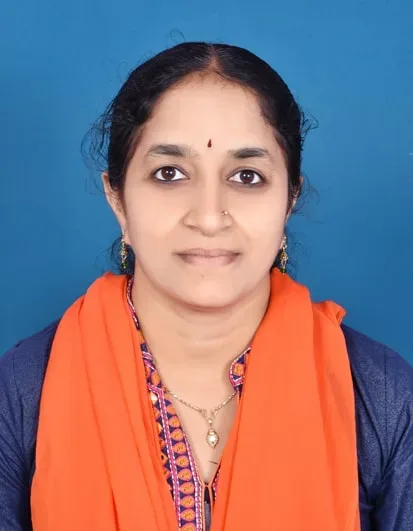
Dr. Parimala Prabhakar
Associate Professor
Dr. Venu K N
Associate Professor
Dr. Ramya H R
Associate Professor
Nisha S L
Assistant Professor
Dr. Kusuma S M
Assistant Professor
Dr. Arvind Kumar G
Assistant Professor
Dr. Akshata Kori
Assistant Professor
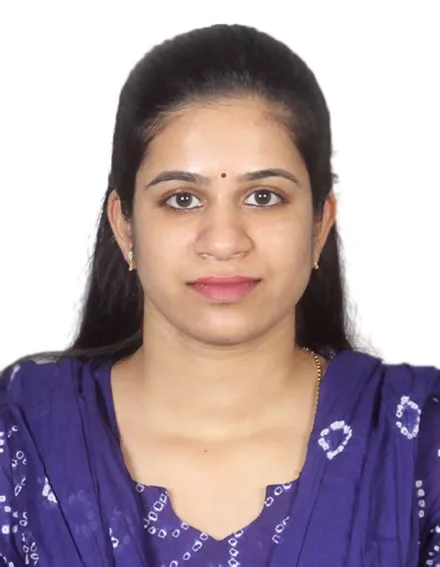
Dr. Kavita Avinash Patil
Senior Assistant Professor
Dr. Vijaya Madhavi C M
Assistant Professor (Senior scale)
Pooja H L
Assistant Professor
Dr. Tirmanwar Shubham Rao
Assistant Professor
Rashmi Alva
Assistant Instructor
Subodh Vithal Manvi
Assistant Professor Designate
Labs & Infrastructure
WIRELESS NETWORKS LABORATORY
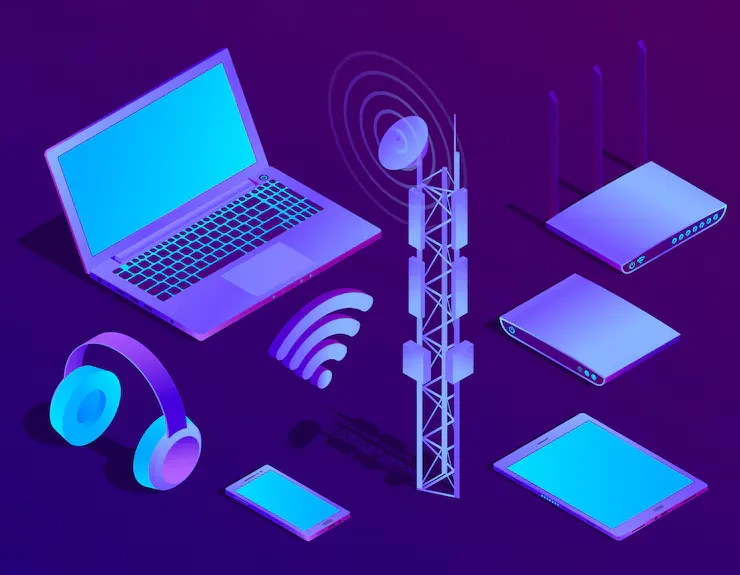
The Wireless Network Laboratory provides students with hands-on experience in the simulation, configuration, and performance evaluation of wired, ad-hoc, and cellular networks using the Network Simulator 3 (NS-3) platform. Students develop and execute simulation scripts to design network topologies, configure communication parameters, implement and evaluate routing protocols, and analyze network performance under different scenarios. The laboratory also introduces students to Wireshark for real-time packet capture, protocol analysis, and troubleshooting. Through these practical exercises, students gain a comprehensive understanding of network behavior, routing mechanisms, packet-level communication, and performance metrics in both wired and wireless networking environments.
WIRELESS NETWORKS LABORATORY
The Wireless Network Laboratory provides students with hands-on experience in the simulation, configuration, and performance evaluation of wired, ad-hoc, and cellular networks using the Network Simulator 3 (NS-3) platform. Students develop and execute simulation scripts to design network topologies, configure communication parameters, implement and evaluate routing protocols, and analyze network performance under different scenarios. The laboratory also introduces students to Wireshark for real-time packet capture, protocol analysis, and troubleshooting. Through these practical exercises, students gain a comprehensive understanding of network behavior, routing mechanisms, packet-level communication, and performance metrics in both wired and wireless networking environments.
Microwave and Antenna Engineering lab.
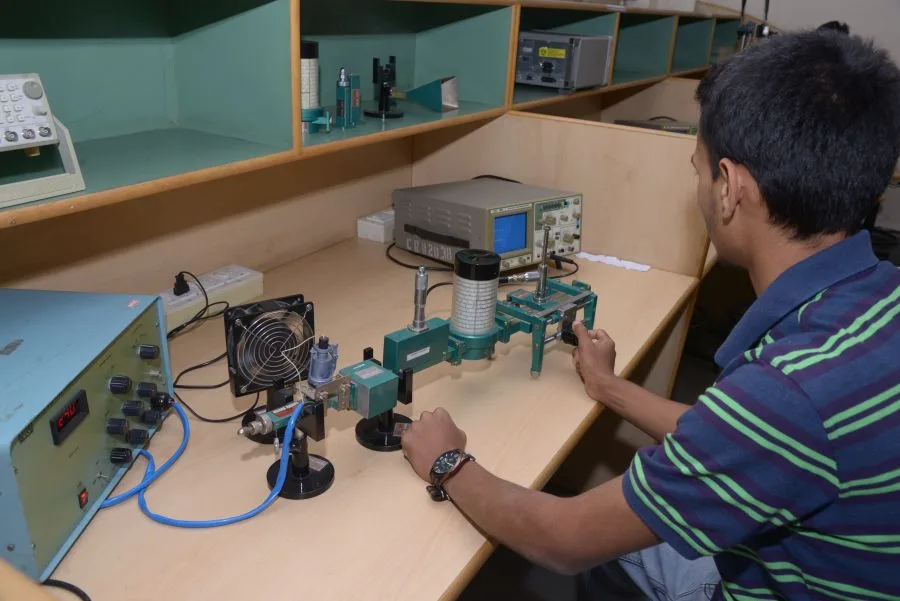
The Microwave and Antenna Laboratory provides state-of-the-art infrastructure for testing, modelling, and characterizing high- frequency RF systems and specialized antenna architectures. Features precision X-band waveguide test benches to evaluate active sources, standing wave parameters, transmission line impedance, and substrate material properties. Equipped to measure power division, coupling coefficient, directivity, and isolation across waveguide components and planar microstrip circuits. Facilitates complete far-field radiation testing to measure directivity, gain, and half-power beam width (HPBW) for wire, horn, reflector, and array antennas. Integrates industry-standard Ansys HFSS 3D EM simulation software for full-wave modelling, S-parameter extraction, and 3D radiation pattern analysis of microstrip patch antennas and arrays.
Microwave and Antenna Engineering lab.
The Microwave and Antenna Laboratory provides state-of-the-art infrastructure for testing, modelling, and characterizing high- frequency RF systems and specialized antenna architectures. Features precision X-band waveguide test benches to evaluate active sources, standing wave parameters, transmission line impedance, and substrate material properties. Equipped to measure power division, coupling coefficient, directivity, and isolation across waveguide components and planar microstrip circuits. Facilitates complete far-field radiation testing to measure directivity, gain, and half-power beam width (HPBW) for wire, horn, reflector, and array antennas. Integrates industry-standard Ansys HFSS 3D EM simulation software for full-wave modelling, S-parameter extraction, and 3D radiation pattern analysis of microstrip patch antennas and arrays.
Advanced Embedded System Lab
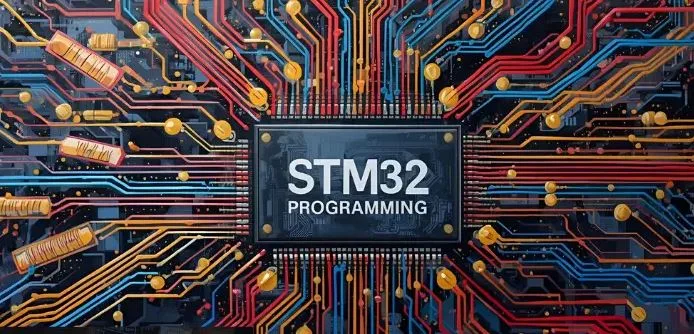
Advanced Embedded Systems Lab provides hands-on experience with STM32-based ARM Discovery boards, beginning with simulation- based ARM programming, instruction-set concepts, and fundamental data-processing operations using Kiel µVision. Students progress to hardware-based interfacing and control involving GPIO, UART, ADC, PWM, I²C, SPI, LCD, keypad and sensors, followed by advanced embedded applications. The lab further explores Low power features, FreeRTOS, BLE, LoRa/Sub-GHz communication, camera-based edge vision, and CAN bus, equipping students with practical skills for developing real-time and connected embedded systems.
Advanced Embedded System Lab
Advanced Embedded Systems Lab provides hands-on experience with STM32-based ARM Discovery boards, beginning with simulation- based ARM programming, instruction-set concepts, and fundamental data-processing operations using Kiel µVision. Students progress to hardware-based interfacing and control involving GPIO, UART, ADC, PWM, I²C, SPI, LCD, keypad and sensors, followed by advanced embedded applications. The lab further explores Low power features, FreeRTOS, BLE, LoRa/Sub-GHz communication, camera-based edge vision, and CAN bus, equipping students with practical skills for developing real-time and connected embedded systems.
IOT Systems Lab.
In this lab students will use Raspberry Pi to interface multiple sensors, collect and visualize live data. Sensors range from simple temperature sensors to FSRs to Infrared Cameras. Along the way students will learn how to calibrate sensors, how to configure the ADC's to study effect on measurement resolution and the impact of sensor noise on measurements. Finally, students will use standard machine learning techniques to perform simple data classification. Python will be the programming language used for all experiments.
IOT Systems Lab.
In this lab students will use Raspberry Pi to interface multiple sensors, collect and visualize live data. Sensors range from simple temperature sensors to FSRs to Infrared Cameras. Along the way students will learn how to calibrate sensors, how to configure the ADC's to study effect on measurement resolution and the impact of sensor noise on measurements. Finally, students will use standard machine learning techniques to perform simple data classification. Python will be the programming language used for all experiments.
Antenna Engineering for IOT Lab
The Antenna engineering for IOT Laboratory for M.Tech in IoT and Sensor Systems provides an advanced, hands-on simulation environment for designing, modelling, and optimizing next- generation wireless connectivity hardware. The curriculum bridges fundamental 3D electromagnetic principles with industrial sensor integration—progressing from planar IoT node radiators to body-centric wearables, mmWave 5G arrays, and smart antenna-based sensing structures using Ansys HFSS.
Antenna Engineering for IOT Lab
The Antenna engineering for IOT Laboratory for M.Tech in IoT and Sensor Systems provides an advanced, hands-on simulation environment for designing, modelling, and optimizing next- generation wireless connectivity hardware. The curriculum bridges fundamental 3D electromagnetic principles with industrial sensor integration—progressing from planar IoT node radiators to body-centric wearables, mmWave 5G arrays, and smart antenna-based sensing structures using Ansys HFSS.
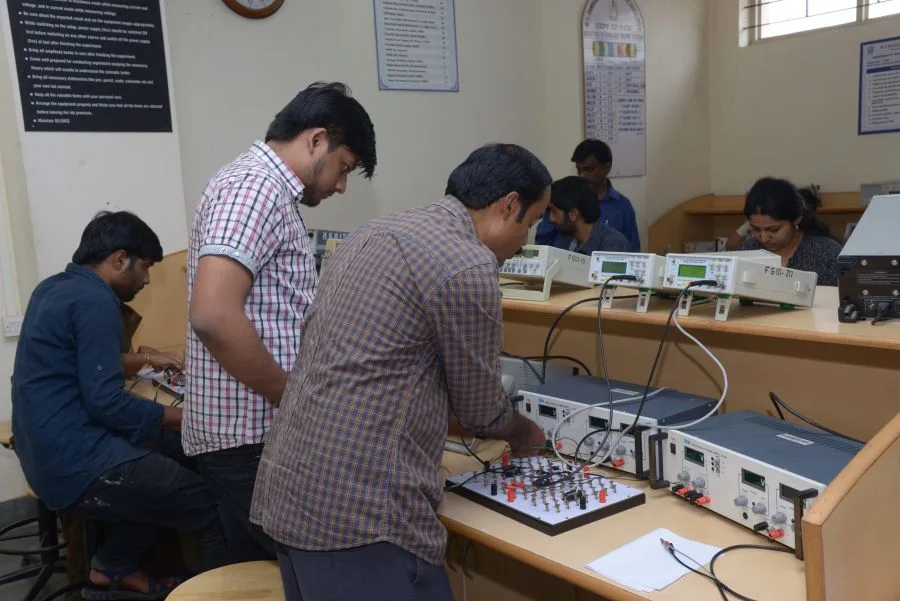
Fundamentals of Electronics and Communication Lab
The Fundamentals of ECE Laboratory provides hands-on exposure to the basic concepts of electronics and communication engineering. Students perform experiments involving electronic components, rectifiers, diodes, transistors, operational amplifiers, and digital logic circuits. The laboratory helps students understand circuit operation, measurement techniques, and practical applications of fundamental ECE principles. It develops essential skills in circuit assembly, testing, troubleshooting, and analysis using laboratory instruments.
Fundamentals of Electronics and Communication Lab
The Fundamentals of ECE Laboratory provides hands-on exposure to the basic concepts of electronics and communication engineering. Students perform experiments involving electronic components, rectifiers, diodes, transistors, operational amplifiers, and digital logic circuits. The laboratory helps students understand circuit operation, measurement techniques, and practical applications of fundamental ECE principles. It develops essential skills in circuit assembly, testing, troubleshooting, and analysis using laboratory instruments.
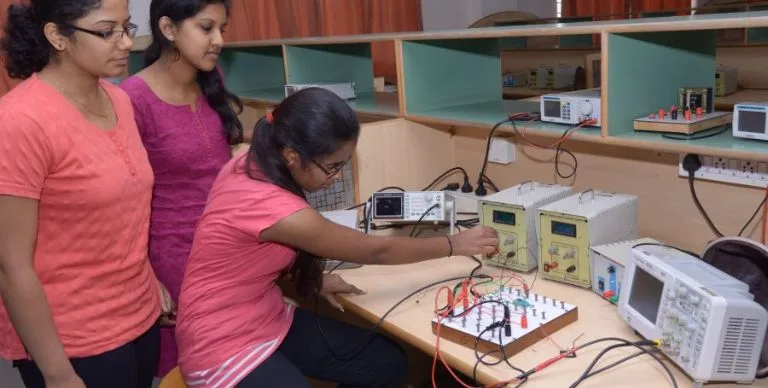
Analog Circuit Design Lab
The Analog Circuit Design Laboratory provides hands-on experience in the design, simulation, testing, and analysis of amplifiers, oscillators, filters, multivibrators, regulators, PLLs, ADC/DACs, and instrumentation amplifiers. Students develop practical skills in analog circuit implementation, measurement, troubleshooting, and performance evaluation using ICs, electronic components, and simulation tools. The laboratory also introduces AI-based simulation of op-amp circuits, integrating conventional analog circuit design with modern intelligent and computational techniques.
Analog Circuit Design Lab
The Analog Circuit Design Laboratory provides hands-on experience in the design, simulation, testing, and analysis of amplifiers, oscillators, filters, multivibrators, regulators, PLLs, ADC/DACs, and instrumentation amplifiers. Students develop practical skills in analog circuit implementation, measurement, troubleshooting, and performance evaluation using ICs, electronic components, and simulation tools. The laboratory also introduces AI-based simulation of op-amp circuits, integrating conventional analog circuit design with modern intelligent and computational techniques.
Introduction to Machine Learning Lab
Introduction to Machine Learning Lab
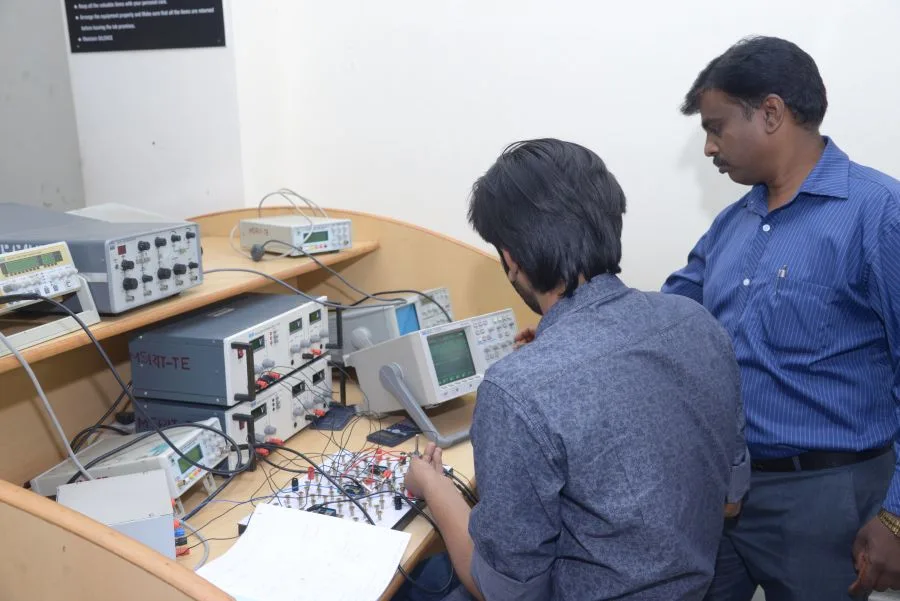
Analog and Digital Communication Lab
The Analog and Digital Communication Laboratory bridges theoretical signal processing principles with practical hardware implementations and software simulations. The course progresses sequentially through continuous-wave analog modulation, pulse digitizing techniques, digital passband keying, and algorithmic information theory.
Analog and Digital Communication Lab
The Analog and Digital Communication Laboratory bridges theoretical signal processing principles with practical hardware implementations and software simulations. The course progresses sequentially through continuous-wave analog modulation, pulse digitizing techniques, digital passband keying, and algorithmic information theory.
Digital Signal Processing Lab
Digital Signal Processing Lab
Skill Enhancement Lab
Skill lab provides comprehensive foundation in data processing, GenerativeAI and data structures. Students gain experience in data manipulation, RAG based systems, conversational AI and efficient implementation of data structures and algorithms.
Skill Enhancement Lab
Skill lab provides comprehensive foundation in data processing, GenerativeAI and data structures. Students gain experience in data manipulation, RAG based systems, conversational AI and efficient implementation of data structures and algorithms.
Antenna Fabrication Lab
The Antenna Fabrication Lab is a specialized laboratory used to design and fabricate different types of antennas, such as dipole, monopole, Yagi-Uda, microstrip patch, horn, and loop antennas, using suitable materials and fabrication techniques. The laboratory provides various equipment and tools for cutting, drilling, soldering, PCB fabrication, and mechanical assembly. The main objective of the lab is to provide students with practical knowledge of the complete antenna design, fabrication, and testing process. It also helps students understand how fabrication dimensions, material properties, and construction techniques influence the performance and characteristics of an antenna.
Antenna Fabrication Lab
The Antenna Fabrication Lab is a specialized laboratory used to design and fabricate different types of antennas, such as dipole, monopole, Yagi-Uda, microstrip patch, horn, and loop antennas, using suitable materials and fabrication techniques. The laboratory provides various equipment and tools for cutting, drilling, soldering, PCB fabrication, and mechanical assembly. The main objective of the lab is to provide students with practical knowledge of the complete antenna design, fabrication, and testing process. It also helps students understand how fabrication dimensions, material properties, and construction techniques influence the performance and characteristics of an antenna.
Advanced Engineering mathematic for Machine Learning Lab
The Advanced Engineering Mathematics for Machine Learning Laboratory provides students with hands-on exposure to the mathematical foundations underlying modern Machine Learning and Artificial Intelligence. The laboratory enables students to apply concepts from linear algebra, probability, statistics, calculus and numerical methods to practical machine learning problems. Through computational exercises and data-driven experiments, students develop skills in matrix operations, data representation, statistical analysis, optimization and model evaluation. The laboratory bridges theoretical mathematics with practical ML applications, strengthening students’ analytical, computational and problem-solving abilities and preparing them for advanced studies and industry applications in AI, Machine Learning and Data Science.
Advanced Engineering mathematic for Machine Learning Lab
The Advanced Engineering Mathematics for Machine Learning Laboratory provides students with hands-on exposure to the mathematical foundations underlying modern Machine Learning and Artificial Intelligence. The laboratory enables students to apply concepts from linear algebra, probability, statistics, calculus and numerical methods to practical machine learning problems. Through computational exercises and data-driven experiments, students develop skills in matrix operations, data representation, statistical analysis, optimization and model evaluation. The laboratory bridges theoretical mathematics with practical ML applications, strengthening students’ analytical, computational and problem-solving abilities and preparing them for advanced studies and industry applications in AI, Machine Learning and Data Science.
Other Facilities
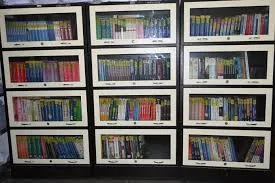
Department Library
The Department Library serves as a valuable academic resource centre, supporting the teaching, learning, and research needs of students, faculty, and staff. With a collection of 1000+ books, the library offers access to a wide range of titles covering core subjects, emerging technologies, reference materials, and allied areas of Electronics and Telecommunication Engineering. The collection is carefully curated to complement the academic curriculum while encouraging independent learning and knowledge enhancement. Students can utilize the library resources for coursework, projects, seminars, competitive examinations, and research activities. Faculty and staff can also access the resources to support teaching, professional development, and scholarly pursuits.
Department Library
The Department Library serves as a valuable academic resource centre, supporting the teaching, learning, and research needs of students, faculty, and staff. With a collection of 1000+ books, the library offers access to a wide range of titles covering core subjects, emerging technologies, reference materials, and allied areas of Electronics and Telecommunication Engineering. The collection is carefully curated to complement the academic curriculum while encouraging independent learning and knowledge enhancement. Students can utilize the library resources for coursework, projects, seminars, competitive examinations, and research activities. Faculty and staff can also access the resources to support teaching, professional development, and scholarly pursuits.
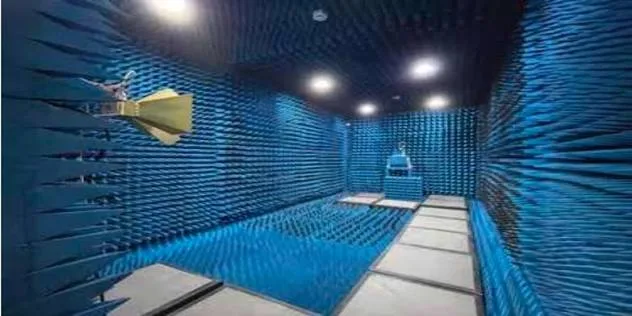
Centre for Antennas and Radio Frequency Systems (CARFS)
CARFS is engaged in advanced research, design, innovation, training and consultation in the field of Antennas and Radio Frequency subsystems for Wireless Systems OBJECTIVES OF THE CENTRE To conduct Advanced Research leading to innovations in the areas of Antennas and RF systems. To offer Consultancy Services and to seek external Funding from the government agencies and industry. To collaborate with Industrial partners in the design and development of novel Antennas and RF systems for applications in wireless systems. To offer Workshops and short term courses to train Engineers in the Wireless Industry. Train students in the Research and Design of Antennas and RF systems. To publish Journal articles and Patents.
Centre for Antennas and Radio Frequency Systems (CARFS)
CARFS is engaged in advanced research, design, innovation, training and consultation in the field of Antennas and Radio Frequency subsystems for Wireless Systems OBJECTIVES OF THE CENTRE To conduct Advanced Research leading to innovations in the areas of Antennas and RF systems. To offer Consultancy Services and to seek external Funding from the government agencies and industry. To collaborate with Industrial partners in the design and development of novel Antennas and RF systems for applications in wireless systems. To offer Workshops and short term courses to train Engineers in the Wireless Industry. Train students in the Research and Design of Antennas and RF systems. To publish Journal articles and Patents.
Top Recruiters & Industry Collaboration
Top Recruiters







Industry Partners / Collaborations
MoU with NOKIA
MoU with STELLANTIS
Placements
Research Areas
.
Publications
Journal Articles
- 1.
- 2.
-
3.
AI-IoT-ENABLED CROP MONITORING THROUGH CROP STAGE AND LEAF DISEASE IDENTIFICATION USING PECFIS AND DGBESCNN
ABIRAMI, N., MEKALI, H. V., YADAV, S. G. S., ANAKATH, A. S., Y., P. M. A. M. A., SENTHILKUMAR, S., BEGUM, A. U., & RAJARAM, A · Journal of Environmental Protection and Ecology · 2025
- 4.
-
5.
Deep Encoder–Decoder Model (Deep EDM) for Efficient CSI Feedback in MIMO Systems
Pundalik Chavan, Geetha Pawar, H. R. Ramya, Smitha G. Prabhu, S. Rohith, H. V. Ramachandra, H. Hanumanthappa, H. C. Ramaprasad · SN Computer Science · 2026
- 6.
- 7.
Other Publications
- 1.
- 2.
- 3.
- 4.
- 5.
- 6.
- 7.
-
8.
An Open VLA Powered Robot with ROS2 for Autonomous Elder Care Assistance
Abhinav V S, Anirudh Sanjeev, Vijaya Madhavi C M, Abhishek R, Mohd Saad Shaikh., · International Conference on Networks, Multimedia and Information Technology · 2026
- 9.
Achievements
NBA ACCREDITED
Board of Studies
View the members of the Board of Studies for this department.
View Members