
About the Department
Overview
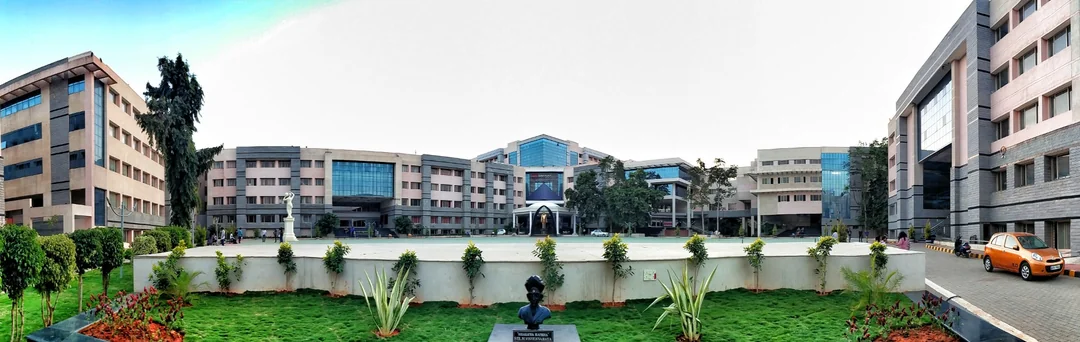
The Department of Physics at M.S. Ramaiah Institute of Technology (MSRIT), established in 1962, is one of the oldest departments at the institute. Recognized as a VTU Research Centre since April 2008, the department is committed to excellence in teaching, research, and innovation. The Engineering Physics courses provide students with a strong foundation in the fundamental principles underlying modern engineering applications.
The department has a vibrant research environment, with thirteen Ph.D. scholars graduated and eleven scholars (eight full-time and three part-time) currently pursuing doctoral research. The department has successfully completed nine funded projects, with two projects currently ongoing, supported by agencies including DAE-BRNS, VGST, SERB, and RIT - Seed, with total research funding exceeding ₹1 crore. The department is supported by well-equipped laboratories, advanced experimental facilities, and computational tools such as Gaussian 09 and Crystal17. The current research areas include Materials Science, Crystallography, Liquid Crystals, Nanomaterials, Fluorescence Spectroscopy, Radiation Physics, Soft and Living Matter, and Computational Studies.
Vision
Mission
Programmes Offered
Click a programme to view details, outcomes, syllabus, and more.
Department Faculty
Meet the educators and researchers guiding our department.
Dr. A. Jagannatha Reddy
Head of DepartmentProfessor & Head, Department of Physics
Dr. Ambika M R
Assistant Professor (Senior Grade)
Dr. K.L. Sandhya
Assistant Professor (Selection Grade)
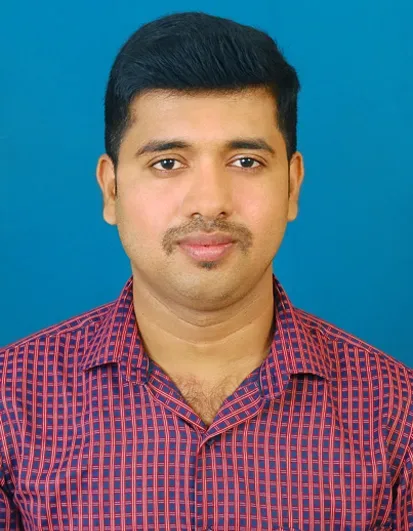
Dr. Mahendra K.
Assistant Professor

Dr. Nagesh B. V.
Assistant Professor (Selection Grade)
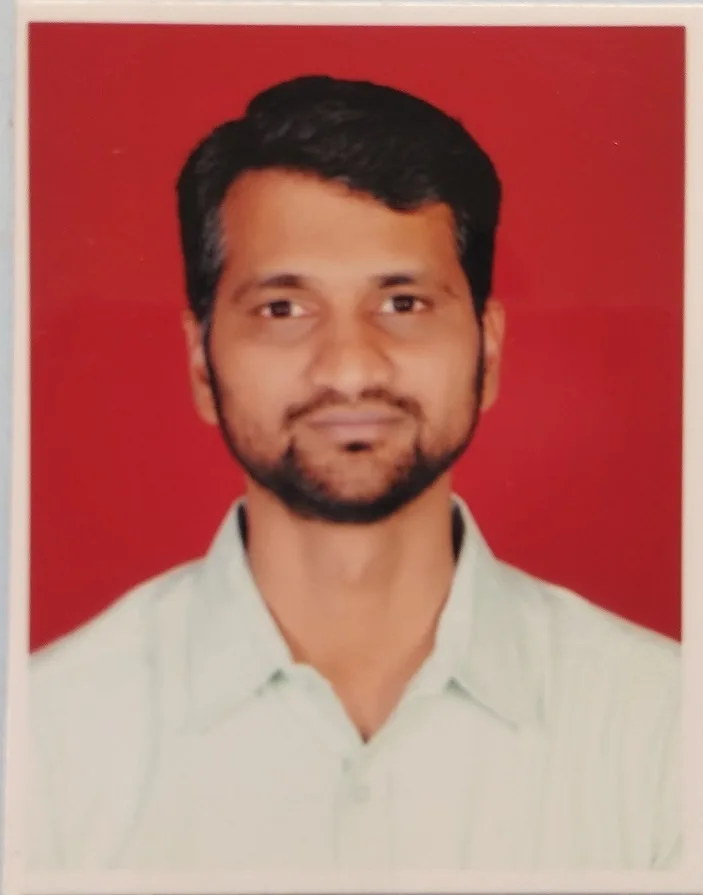
Dr. Siddlingeshwar B.
Assistant Professor (Selection Grade)
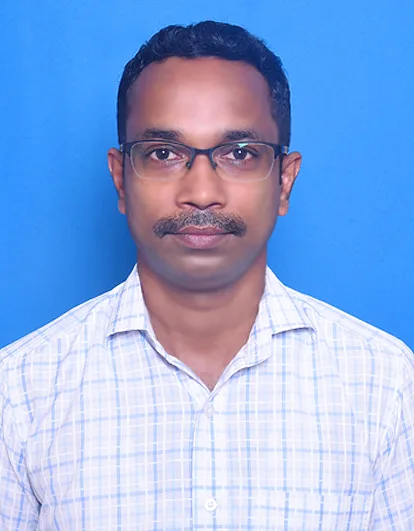
Dr. Yashodhara I.
Assistant Professor

Dr. G.N. Anil Kumar
Assistant Professor (Selection Grade)
Dr. Seema Agarwal
Associate Professor
Funded Projects
Aspects of Chern-Simous Modified Quantum Electrodynamics
DAE-BRNS
PI - Dr Tomy Scaria
A study of correlation/polarization effects on (e,2e) reactions of alkali atoms
DAE-BRNS
PI - Dr Seema Agarwal
Experimental investigations on LC-nano composites
DAE-BRNS
PI- Dr Sandhya K. L.
LC-nano composites for optical switch and sensor applications
VGST RGS/F
PI- Dr Sandhya K. L.
Experimental and theoretical study of halogen bonding in Acid-Pyridine co-crystals
VGST RGS/F
PI - Dr G. N. Anilkumar
Exploring the fluorescent spectroscopic, quantum chemical and Z-scan properties of novel chalcones based fluorochemo sensors for heavy metal ion detection and optical limiting applications
VGST RGS/F
PI- Dr. Kalpana Sharma
Experimental investigations on developing nanoporous membranes derived from LC nano composites for energy storage applications
VGST
PI - Dr Sandhya K. L.
Liquid crystal as matrices for nanomaterial assembly - manipulation
SERB
PI - Dr Sandhya K. L.
Flexible and graded polymer composite radiation shields for medical applications
RIT - SEED
PI - Dr Ambika M. R.
Radiative protective qualities of wearable, nontoxic & layered polymer composites with multifillers
DAE-BRNS
PI - Dr Ambika M. R.
Labs & Infrastructure
Engineering Physics Lab
The Engineering Physics Laboratory provides students with hands-on experience in the fundamental concepts of Physics as prescribed by RIT. The laboratory covers experiments related to optics, lasers, semiconductors, mechanics, quantum mechanics, and quantum computing. It helps students connect theoretical concepts with practical applications while developing skills in experimental techniques, measurement and data analysis.
Engineering Physics Lab
The Engineering Physics Laboratory provides students with hands-on experience in the fundamental concepts of Physics as prescribed by RIT. The laboratory covers experiments related to optics, lasers, semiconductors, mechanics, quantum mechanics, and quantum computing. It helps students connect theoretical concepts with practical applications while developing skills in experimental techniques, measurement and data analysis.
Advanced Materials Lab
The laboratory is equipped with the following instruments: 1. Muffle Furnace: Ants Prosys furnace, up to 1200°C, with Kanthal APM heating elements, fibre insulation, PID controller with 30 programmable segments, and safety protections. 2. Tube Furnace: Compact rapid thermal processing furnace with quartz tube and vacuum flanges, 50°C/s heating rate, halogen heating, and 30-segment temperature controller with ±1°C accuracy. 3. Vacuum Oven: Ants Prosys oven operating from +5°C to 200°C, SS304 chamber, insulated double-wall construction, PID control with ±1°C accuracy, and vacuum range of 0–760 mm Hg. 4. Battery Tester: Neware BTS4000-5V50mA-CV, 8-channel system with 0.1–100 mA current range, ±0.01% FS accuracy, and CC/CV/CCCV/CP/pulse charge-discharge modes.
Advanced Materials Lab
The laboratory is equipped with the following instruments: 1. Muffle Furnace: Ants Prosys furnace, up to 1200°C, with Kanthal APM heating elements, fibre insulation, PID controller with 30 programmable segments, and safety protections. 2. Tube Furnace: Compact rapid thermal processing furnace with quartz tube and vacuum flanges, 50°C/s heating rate, halogen heating, and 30-segment temperature controller with ±1°C accuracy. 3. Vacuum Oven: Ants Prosys oven operating from +5°C to 200°C, SS304 chamber, insulated double-wall construction, PID control with ±1°C accuracy, and vacuum range of 0–760 mm Hg. 4. Battery Tester: Neware BTS4000-5V50mA-CV, 8-channel system with 0.1–100 mA current range, ±0.01% FS accuracy, and CC/CV/CCCV/CP/pulse charge-discharge modes.
Liquid Crystal -Nano Composites Lab
With funding support from VGST, BRNS-DAE, and ANRF (SERB-Power), a well-equipped laboratory has been established for the characterization of liquid crystalline materials. The laboratory facilitates dielectric measurements as a function of temperature and frequency, polarization measurements using the triangular-wave method, response-time and viscosity measurements, Fredericksz threshold measurements, and birefringence measurements using the Senarmont method. It also enables I–V measurements using the four-probe method as a function of temperature. Most of these measurements are automated using LabVIEW.
Liquid Crystal -Nano Composites Lab
With funding support from VGST, BRNS-DAE, and ANRF (SERB-Power), a well-equipped laboratory has been established for the characterization of liquid crystalline materials. The laboratory facilitates dielectric measurements as a function of temperature and frequency, polarization measurements using the triangular-wave method, response-time and viscosity measurements, Fredericksz threshold measurements, and birefringence measurements using the Senarmont method. It also enables I–V measurements using the four-probe method as a function of temperature. Most of these measurements are automated using LabVIEW.
Radiation Physics Lab
The Radiation Physics Laboratory focuses on radiation physics, radiation shielding, and advanced functional materials. Supported by funded projects from DAE, BRNS, the Government of India, and the MSRIT SEED Grant, the laboratory is equipped for material fabrication, controlled irradiation, and gamma-ray spectrometry. Research includes polymer-based radiation shielding composites and radiation-modified MXene-based materials for energy applications.
Radiation Physics Lab
The Radiation Physics Laboratory focuses on radiation physics, radiation shielding, and advanced functional materials. Supported by funded projects from DAE, BRNS, the Government of India, and the MSRIT SEED Grant, the laboratory is equipped for material fabrication, controlled irradiation, and gamma-ray spectrometry. Research includes polymer-based radiation shielding composites and radiation-modified MXene-based materials for energy applications.
Fluorescence Spectroscopy Lab
The laboratory is equipped with modern experimental and computational facilities supporting research in materials science, photophysics, photochemistry, and optical spectroscopy. The Fluorescence Spectrophotometer (Fluorimeter) enables steady-state fluorescence measurements, including excitation and emission spectra and photophysical studies. Research is carried out in diverse areas including fluorescent dyes, organic functional materials, carbon-based nanomaterials, excited-state dynamics, solvatochromism, charge-transfer processes, and photonic applications. Research Areas: Photophysics, photochemistry, fluorescent dyes, organic functional materials, carbon-based nanomaterials, excited-state dynamics, solvatochromism, charge-transfer processes, and photonic applications. The facilities support both experimental and computational studies, helping researchers understand the structure–property relationships of advanced functional materials.
Fluorescence Spectroscopy Lab
The laboratory is equipped with modern experimental and computational facilities supporting research in materials science, photophysics, photochemistry, and optical spectroscopy. The Fluorescence Spectrophotometer (Fluorimeter) enables steady-state fluorescence measurements, including excitation and emission spectra and photophysical studies. Research is carried out in diverse areas including fluorescent dyes, organic functional materials, carbon-based nanomaterials, excited-state dynamics, solvatochromism, charge-transfer processes, and photonic applications. Research Areas: Photophysics, photochemistry, fluorescent dyes, organic functional materials, carbon-based nanomaterials, excited-state dynamics, solvatochromism, charge-transfer processes, and photonic applications. The facilities support both experimental and computational studies, helping researchers understand the structure–property relationships of advanced functional materials.
Other Facilities
The department is also equipped with advanced computational software, including Gaussian 09 and Crystal17.
Other Facilities
The department is also equipped with advanced computational software, including Gaussian 09 and Crystal17.
Top Recruiters & Industry Collaboration
Industry Partners / Collaborations
- Dr Siddlingeshwar B has research collaborations with the Institute of Life Sciences and Technology, Daugavpils University, Latvia, and the Department of Chemistry, Hokkaido University, Japan.
- Dr Ambika M.R. has research collaborations with the BARC, IISc, Bangalore University, SJCE, Rensselaer Polytechnic Institute (USA), Sunway University (Malaysia), and Sungkyunkwan University (Korea).
- Dr Mahendra K. has research collaborations with NITK, NIT Nagaland, CSIR Hyderabad, Central University Nagaland, GM University, REVA University, Dayananda Sagar University, SIT Tumkur, NMAMIT, RNSIT, and Manipal University in materials science, nanotechnology, photocatalysis, energy materials, and related areas.
- Dr Yashodhara I. has research collaborations with Mangalore University, NIT Nagaland, GM University, REVA University, Dayananda Sagar University, and NMAMIT in radiation safety, materials science, nanotechnology, and polymer research.
Research Areas
Liquid Crystals
Crystallography
Fluorescence Spectroscopy
Energy Materials
Nanotechnology
Soft and Living Matter
Radiation Physics
Computational Materials Science
Publications
Journal Articles
-
1.
Fluorescence Quenching and the Role of Non-Hybrid Metal Oxide Nanoparticles as Quenchers for Analyte Detection: A Brief Review
Deepa HK, Kalpana Sharma, A Jagannatha Reddy, VV Koppal · Applied Research in Engineering Sciences · 2026
-
2.
Computational Evaluation of Gamma‐Ray Shielding Performance of W/Sb‐Filled Polydimethylsiloxane Composites Using XMuDat and Phy‐X
Srilakshmi Banagere Prasannakumar, Ambika Madalakote Rajanna, Jagannatha Reddy Aswatha, Yeshwanth Hanumanth Reddy, Nagaiah Ningaiah · Polymers for Advanced Technologies · 2026
-
3.
Structural, Spectroscopic, and efficient room temperature Gas Sensing applications of Pure and Eu3+ doped tungstite [WO3· H2O] nanoparticles
DL Shruthi, GN Anil Kumar, A Jagannatha Reddy · Ceramics International · 2025
-
4.
Effect of doping colloidal carbon dots on electro-optic and photoluminescence properties of nematic liquid crystalline system
Keekana Laxminarayana Sandhya, Chandrashekar Darshan · Journal of Molecular Liquids · 2025
-
5.
Temperature‑dependent dielectric and LPG sensing performance of millet extract‑mediated combustion‑engineered MgAl2O4 spinel nanoparticles
Apsar Pasha and G. N. AnilKumar S. S. Jagadeesh, N. Dhananjaya, R. Lokesh · Journal of Materials Science: Materials in Electronics · 2026
-
6.
Synthesis, Crystal Structure Elucidation and Structure-Property Correlations of (1, 2, 3-triazol-1-yl) Acetylaminobenzoic Acid Derivatives
DH Harshitha, MK Kokila, Ganga Periyasamy, Anjali Ganjiwale, GN Anil Kumar · Journal of Molecular Structure · 2026
-
7.
Effect of calcium doping on structural, magnetic and temperature-dependent dielectric properties of CaxSr1-xFeO3-δ (0≤ x≤ 0.1) ferrites
VS Kavyashree, GN Anil Kumar · Ceramics International · 2026
-
8.
Evaluation of intermolecular interactions in Co-crystals of 4-cyanopyridine with fluorine-substituted benzoic acid: Insights from experimental and theoretical methods
G.N. Anil Kumar A. Sowmya · Journal of Molecular Structure · 2026
-
9.
Transport Properties of Nano Magnesium Aluminate Synthesized with Millet Extract as a Fuel
SS Jagadeesh, N Dhananjaya, R Lokesh, GN Anil Kumar · Applied Research in Engineering Sciences · 2026
-
10.
Structural, magnetic, optical, DFT, and temperature-dependent dielectric properties of Bi2Fe4O9 microcrystals
VS Kavyashree, GN Anil Kumar · Next Materials · 2026
-
11.
Structural, Spectroscopic, and efficient room temperature Gas Sensing applications of Pure and Eu3+ doped tungstite [WO3· H2O] nanoparticles
DL Shruthi, GN Anil Kumar, A Jagannatha Reddy · Ceramics International · 2025
-
12.
Investigation of dehydration-activated structural phase transition on dielectric properties of tungstite (WO3· H2O) nanoparticles via experimental and theoretical methods
VS Kavyashree, GN Anil Kumar · Next Nanotechnology · 2022
-
13.
Band-gap engineered PEDOT–f-MWCNT nanocomposites for corrosion resistant, EMI shielding, and antibacterial coatings
Mohsina Taj, A Shubha, SR Manohara, B Siddlingeshwar, Pinky Choudhary, Hemant Kumar Daima, Muhammad Faisal · Synthetic Metals · 2026
-
14.
Elucidating the Structure–Nonlinear Optical Property Relationship of Ethynyl Extended Benzanthrone Chromophores
Divya Jattu Gouda, B Siddlingeshwar, HM Suresh Kumar, Shivaraj R Maidur, SR Manohara, Armands Maleckis, Elena M Kirilova · Molecules · 2026
-
15.
Multifunctional polyvinylpyrrolidone-graphene nanocomposites: unlocking synergistic electrical, dielectric, and antimicrobial properties
A Shubha, SR Manohara, Mohsina Taj, B Siddlingeshwar, Devendra Jain, UV Khadke, Neerish Revaprasadu · Diamond and Related Materials · 2025
-
16.
Novel malononitrile substituted benzanthrone dyes: Synthesis, spectroscopic characterization, and combined experimental-DFT investigation of third-order nonlinear optical …
B Siddlingeshwar, V Sujadevi, Elena M Kirilova, Anup Thomas, J Binoy, Prabhakar Chetti, Rahul Murali, Sai Santosh Kumar Raavi · Journal of Molecular Structure · 2025
Books
-
1.
Mechanics of Advanced Materials and Structures
NVR Naidu, KRV Subramanian, Nagaraju Kottam, GN Anil Kumar · CRC Press
Achievements
Dr. Ambika M.R.
- INSA Visiting Scientist Award (2025) and Young Scientist Award (2023).
- Filed two patents (Indian and German).
- Received ₹40 lakh research funding from DAE-BRNS, Government of India (2024).
- Nucleonix–ISRP Best Technical Paper Award (2018).
- Guest Editor for a special issue of Radiation Protection Dosimetry (2023).
Dr. Mahendra K.
- RIT Seed Grant (PI) of ₹4.19 lakh for research on photocatalytic conversion of nitrates to ammonia (2026–28).
- Reviewer for reputed Q1/Q2 journals published by Elsevier and Springer.
- Poster Reviewer, Confluence 2025, GM University, Davanagere.
Dr. Yashodhara I.
- RIT Seed Grant (Co-PI) of ₹4.19 lakh for research on photocatalytic conversion of nitrates to ammonia (2026–28).
- Reviewer for Springer and Elsevier journals, including Q2 journals.
Board of Studies
View the members of the Board of Studies for this department.
View Members