
Computer Science & Engineering (AI & ML)
Head of Department: Dr. Siddesh GM
About the Department
Overview
Vision
Mission
Programmes Offered
Click a programme to view details, outcomes, syllabus, and more.
Department Faculty
Meet the educators and researchers guiding our department.

Dr.Siddesh GM
Head of DepartmentProfessor

Dr. Naveen N C
Professor

Dr. Parkavi A
Professor

Dr. Mohana Kumar S
Associate Professor

Dr. Sini Anna Alex
Associate Professor

Dr. A N Ramya Shree
Associate Professor

Dr.Vishalakshi Prabhu H
Associate Professor

Dr.Sahana Lokesh R
Associate Professor

Dr. Nayana G.Bhat
Associate Professor

Dr. Hemavati
Associate Professor

Dr.Rajaswari SB
Associate Professor

Mrs. Akshatha G C
Assistant Professor

Mrs. Pallavi TP
Assistant Professor

Mrs. Shankaramma
Assistant Professor

Dr.Rakesh Kalshetty
Assistant Professor

Mrs. Shobha K
Assistant Professor

Dr. Nithya N
Assistant Professor

Dr. Josy Elsa Varghese
Assistant Professor

Mr. Chethan S
Assistant Professor

Ms. Veena S
Assistant Professor
Ms. Reshma Rachel Cherish
Assistant Professor

Mrs.Bhavya Jyothi
Assistant Professor

Mr. Subash N
Assistant Professor

Ms. Hosmani Bhagyashree Narayan
Assistant Professor

Ms.Kavya Natikar
Assistant Professor

Mrs.Asmathunnisa N
Assistant Professor

Ms.Shrilaxmi Gidd
Assistant Professor

Dr.Sajini G
Assistant Professor

Mr.Prashanth Reddy
Assistant Professor

Mrs.Rashmi T V
Senior Lecturer
Ms. Hrithwika S
Senior Lecturer
Mr. Akshay S Atreya
Lecturer
Labs & Infrastructure
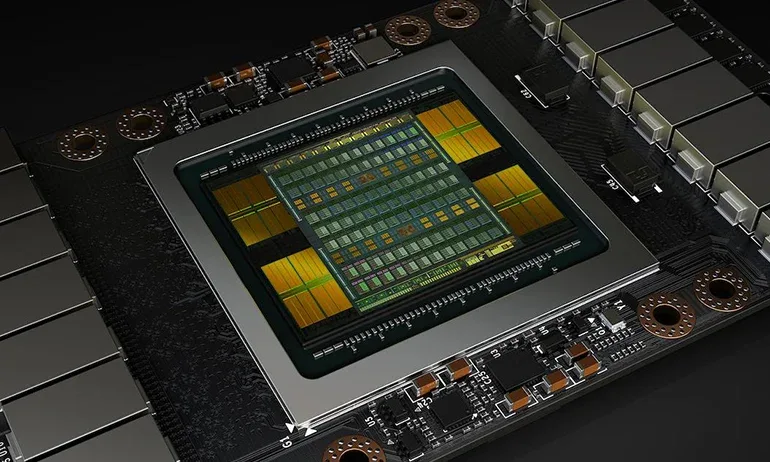
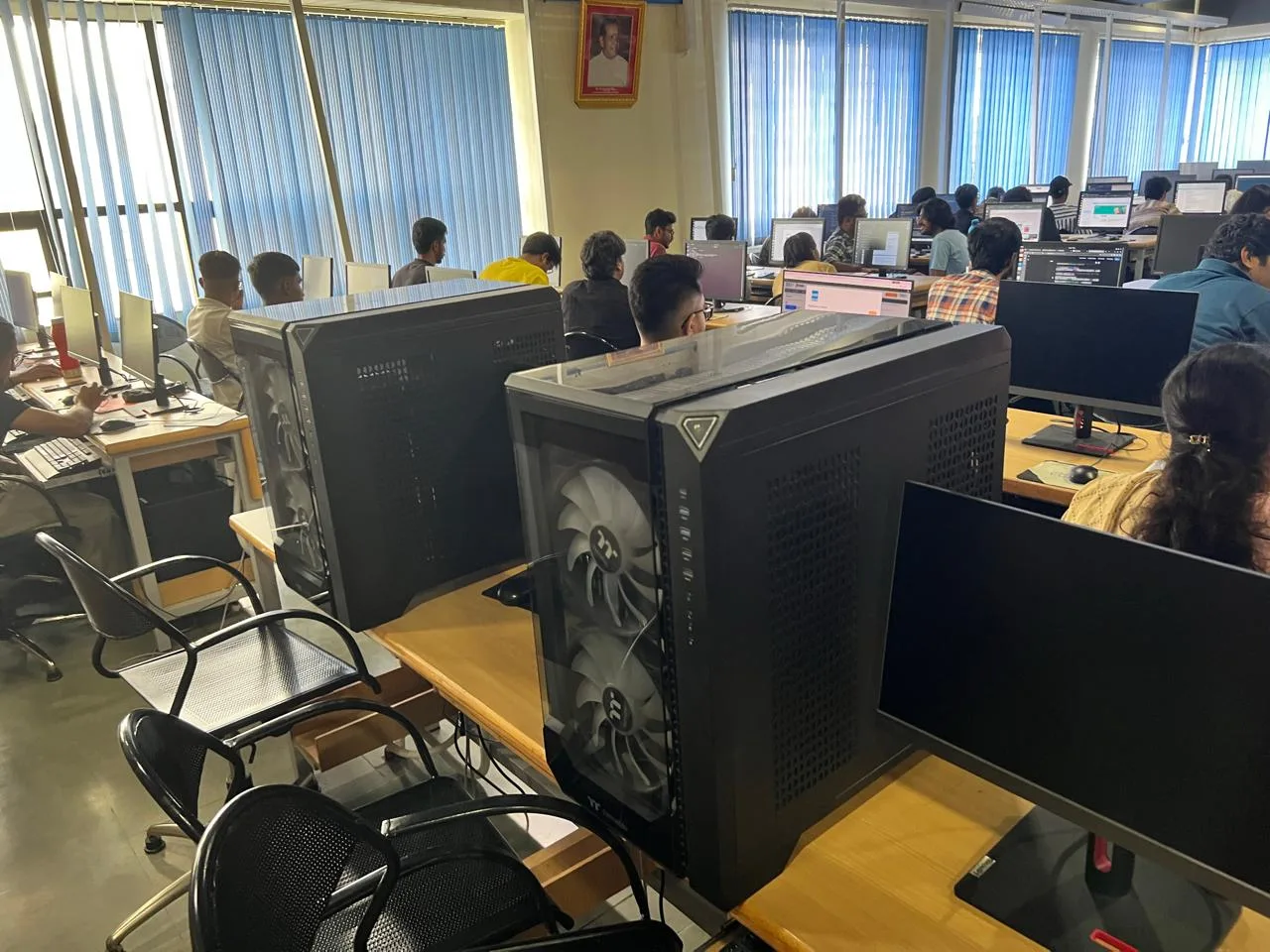
AI & Deep Learning Lab — GPU cluster
The success of modern Artificial Intelligence (AI) and Machine Learning (ML) systems largely depends on their ability to process massive volumes of data efficiently through parallel computing and task-optimized hardware. The resurgence of AI can be traced to the 2012 ImageNet competition, where deep-learning algorithms achieved a remarkable improvement in image-classification accuracy compared with conventional machine-learning approaches. While advances in algorithms, programming techniques, and mathematical models were fundamental to this breakthrough, the availability of specialized hardware, particularly Graphics Processing Units (GPUs), also played a crucial role. Computer Vision (CV) is a prominent example of this evolution and continues to drive innovation across numerous industries, including manufacturing, autonomous vehicles, healthcare, and other application domains. Modern CV systems have progressively transitioned from traditional rule-based approaches to large-scale, data-driven machine-learning and deep-learning paradigms. As these systems increasingly rely on extensive datasets for training and inference, GPU-based computing has become essential for accelerating data processing and model training. By enabling highly parallel computation, GPUs facilitate the efficient processing of massive datasets, often reaching petabyte-scale volumes, thereby supporting faster training, improved prediction accuracy, and more reliable classification performance.
AI & Deep Learning Lab — GPU cluster
The success of modern Artificial Intelligence (AI) and Machine Learning (ML) systems largely depends on their ability to process massive volumes of data efficiently through parallel computing and task-optimized hardware. The resurgence of AI can be traced to the 2012 ImageNet competition, where deep-learning algorithms achieved a remarkable improvement in image-classification accuracy compared with conventional machine-learning approaches. While advances in algorithms, programming techniques, and mathematical models were fundamental to this breakthrough, the availability of specialized hardware, particularly Graphics Processing Units (GPUs), also played a crucial role. Computer Vision (CV) is a prominent example of this evolution and continues to drive innovation across numerous industries, including manufacturing, autonomous vehicles, healthcare, and other application domains. Modern CV systems have progressively transitioned from traditional rule-based approaches to large-scale, data-driven machine-learning and deep-learning paradigms. As these systems increasingly rely on extensive datasets for training and inference, GPU-based computing has become essential for accelerating data processing and model training. By enabling highly parallel computation, GPUs facilitate the efficient processing of massive datasets, often reaching petabyte-scale volumes, thereby supporting faster training, improved prediction accuracy, and more reliable classification performance.

Machine Learning Lab
Machine Learning (ML) has emerged as one of the most transformative technologies of our time, with applications spanning diverse domains. Despite its remarkable potential, the development and deployment of effective ML solutions still depend heavily on human expertise for tasks such as data preprocessing, feature engineering, model selection, hyperparameter tuning, and performance optimization. This dependence can limit the scalability and broader adoption of ML technologies. To address these challenges, the field of **Automated Machine Learning (AutoML)** focuses on systematically automating key stages of the ML pipeline, thereby reducing the need for extensive human intervention. The primary objective of AutoML is to **democratize access to machine learning** by making advanced, state-of-the-art ML techniques more accessible to researchers, developers, and domain experts. From a technical perspective, AutoML can be viewed as the development of **AI systems capable of designing, optimizing, and improving other AI systems**, enabling efficient, scalable, and increasingly autonomous machine-learning development.
Machine Learning Lab
Machine Learning (ML) has emerged as one of the most transformative technologies of our time, with applications spanning diverse domains. Despite its remarkable potential, the development and deployment of effective ML solutions still depend heavily on human expertise for tasks such as data preprocessing, feature engineering, model selection, hyperparameter tuning, and performance optimization. This dependence can limit the scalability and broader adoption of ML technologies. To address these challenges, the field of **Automated Machine Learning (AutoML)** focuses on systematically automating key stages of the ML pipeline, thereby reducing the need for extensive human intervention. The primary objective of AutoML is to **democratize access to machine learning** by making advanced, state-of-the-art ML techniques more accessible to researchers, developers, and domain experts. From a technical perspective, AutoML can be viewed as the development of **AI systems capable of designing, optimizing, and improving other AI systems**, enabling efficient, scalable, and increasingly autonomous machine-learning development.
Networking and Security Lab
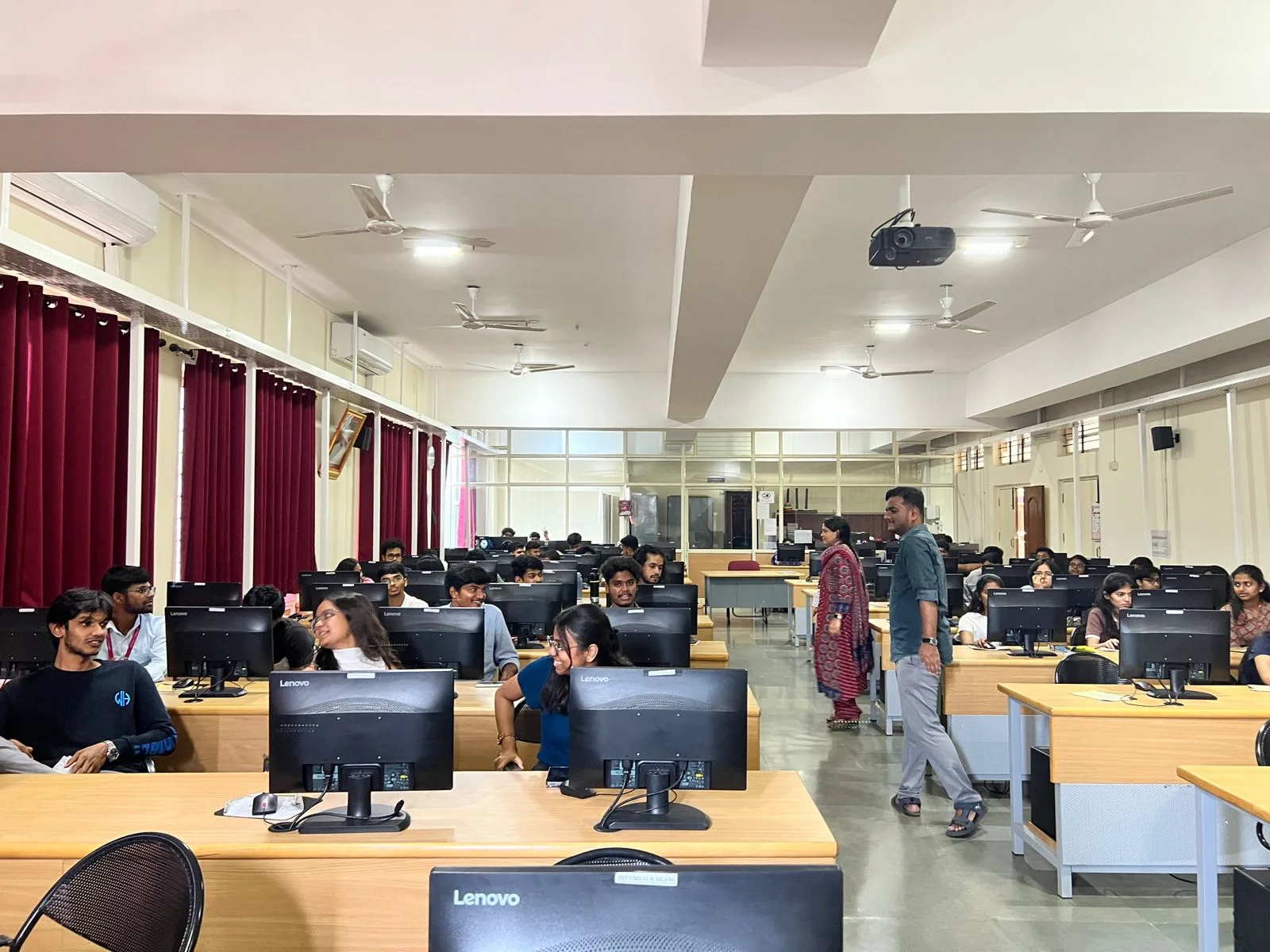
The Computer Networks & Security Lab provides students with practical exposure to network configuration, security mechanisms, and essential cybersecurity techniques. It also includes a Penetration Testing Lab designed to facilitate controlled vulnerability assessment, ethical hacking exercises, and security testing of networked systems. The Programming Lab offers hands-on experience in programming fundamentals, problem-solving, data structures, and algorithms. It enables students to develop efficient and logical solutions through coding exercises, algorithm implementation, and practical laboratory experiments.
Networking and Security Lab
The Computer Networks & Security Lab provides students with practical exposure to network configuration, security mechanisms, and essential cybersecurity techniques. It also includes a Penetration Testing Lab designed to facilitate controlled vulnerability assessment, ethical hacking exercises, and security testing of networked systems. The Programming Lab offers hands-on experience in programming fundamentals, problem-solving, data structures, and algorithms. It enables students to develop efficient and logical solutions through coding exercises, algorithm implementation, and practical laboratory experiments.
AI and ML Lab
AI and ML Lab
Cloud & Server Lab
Cloud & Server Lab
Programming & Data Structures Lab
Programming & Data Structures Lab
Project & Innovation Lab
Project & Innovation Lab
Top Recruiters & Industry Collaboration
Top Recruiters
Industry Partners / Collaborations
NVIDIA CoE
Google Cloud
AWS Academy
Intel AI
Placements
Research Areas
Publications
Journal Articles
-
1.
Achievements
- 2024 — Accreditation & Ranking
- 2023 — Research Excellence
- 2022 — Industry Collaboration
Board of Studies
View the members of the Board of Studies for this department.
View Members